


The League of Corporate Foundations (LCF) opened National CSR Week this year with a firm and necessary message: corporate social responsibility in the Philippines must evolve. It must evolve faster, more equitably, and with measurable impact.
The 2025 LCF CSR Conference and Expo brought together business leaders, NGO practitioners, and government officials for discussions that reflected the changing face of CSR. The theme, “Diversity, Equity, and Inclusivity for Shared Prosperity,” captured a growing shift among companies: a move away from token programs and toward long-term, embedded strategies that uplift communities and build economic resilience.
LCF
I had the opportunity to host the second day of the conference, and what stood out most was not just the scope of CSR efforts being shared, but the urgency and focus now shaping these initiatives. More than ever companies are recognizing that diversity, equity, and inclusion (DEI) are not optional. They are central to building sustainable, future- ready institutions.
Making CSR more responsive and grounded
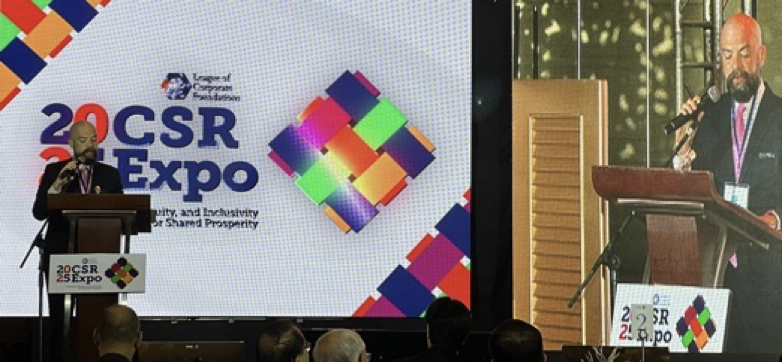
During the conference’s opening keynote, LCF Chairperson Shem Garcia, Executive Director of Vivant Foundation, emphasized that inclusion goes beyond representation – it requires understanding the realities of the people being served.
LCF
“When creating and implementing programs that aim to benefit the many, there remains a challenge that this can often leave behind those with special needs or limited capability to benefit from these programs,” Garcia said.
He pointed out a common pitfall of scale-driven solutions: using digital tools to deliver services in rural or underserved communities, only to find that beneficiaries lack electricity, signal, or the training to use such platforms. “We have seen many programs from the government and the private sector aiming to improve efficiency of bringing services to those in need through technology and digitalization, only to find that those who need it most do not have access,” Garcia said.
These insights set the tone for many of the panels that followed, such as those tackling inclusive education for indigenous learners, enterprise development for informal workers, and access to insurance and savings for vulnerable communities. Systemic inclusion, participants agreed, is not a secondary feature of CSR but a foundational requirement.
Garcia also shared a key takeaway from an internal LCF survey: women now dominate the sector’s workforce, nearly a third of member organizations employ persons with disabilities, and efforts are underway to expand into Visayas and Mindanao. “We best promote DEI when we ourselves are diverse, when we ourselves practice equity, when we ourselves are inclusive,” he said.
CSR measured by impact, not just effort
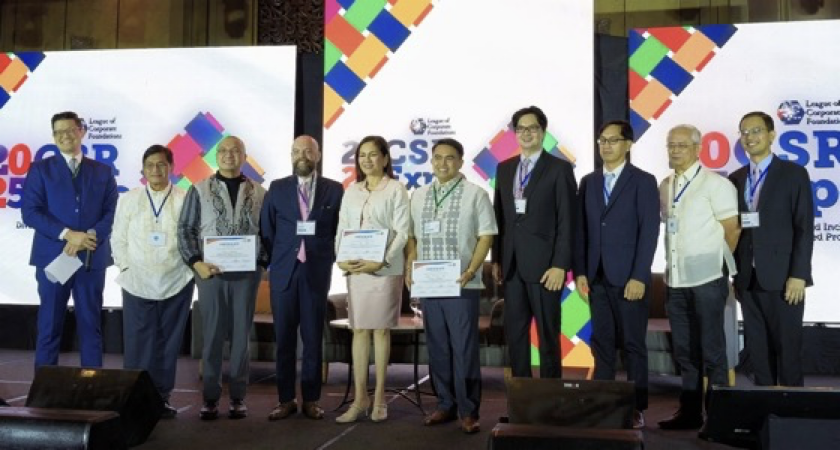
In her keynote address, Senator Risa Hontiveros, Chairperson of the Senate Committee on Women, Children, Family Relations, and Gender Equality, urged companies to go beyond good intentions. “Equity and social justice are not just moral imperatives,” she said. “They are also good for business.”
LCF
Senator Hontiveros cited research showing that women in leadership roles tend to foster more inclusive workplaces and that businesses with inclusive policies tend to be more resilient and adaptive. “When we build systems that are just and fair, we aren’t just being kind, we are building institutions that last,” she added.
She challenged attendees to embed DEI into the very fabric of their operations, not just as side projects but as core business strategies. “You don’t include people as an afterthought,” she said. “You design from the start with them in mind.”
The conference’s second day supported this call through sessions on mental health, creativity, and informal economies. I believe that these are areas not always prioritized in traditional CSR. For example, the panel on mental health integration in CSR, featuring experts from RenewHealth, Unilab Foundation, and the Zuellig Family Foundation, explored practical ways companies can embed mental wellness in their community programs.
Similarly, the “Diversity in Creativity” session, which brought together leaders from JunkNot, Katha Pilipinas, the Department of Trade and Industry, and the British Council, reminded the audience that culture and creativity are powerful levers for inclusive development.
Another important panel, “Empowering Informal Economies,” brought attention to the reality that millions of Filipinos operate outside the formal labor system, facing risks without legal protections or stable income. Panelists from the Department of Labor and Employment (DOLE), DTI, and LCF organizations like BPI Foundation and Manila Water Foundation discussed how strategic CSR programs can create bridges for these workers to access training, financing, and dignity.
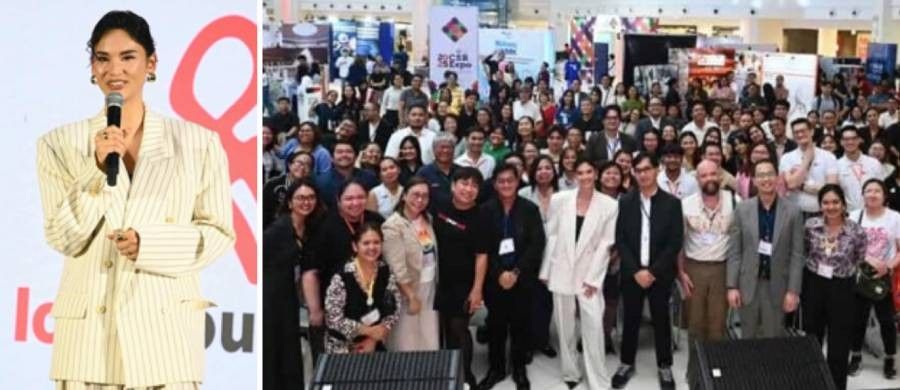
Love Yourself Ambassador, Pia Wurtzbach (Ms. Universe 2015)
A future of collaboration and innovation
One of the Expo’s centerpiece programs was LCF’s LIFE initiative (Initiative for Food Security, Nutrition, and Empowerment), which combines school feeding, livelihood development, and community engagement to fight child malnutrition. Fisherman, eco-advocate, and community leader Ka Dodoy Ballon Jr. shared updates on the project, while encouraging the audience to keep the momentum. “We are being called to help more people, to uplift more communities, and to serve as models to the rest of the country,” Ka Dodoy urged. “Together, let us restore the land, revive the seas, repair communities, and renew our hope.”
The first LIFE community kitchen in Basilan, capable of preparing up to 1,000 Muslim-friendly meals a day, was inaugurated just days before the Expo opened.

LCF
The LIFE program shows what CSR can look like when it is done collaboratively and locally grounded, with the support of local government, partners like the Zuellig Family Foundation and Jollibee Group Foundation, and community stakeholders.
This year’s Expo also featured programs like LoveYourself, an HIV awareness and treatment advocacy group offering free services across the country. Their presence underscored that public health remains a vital pillar of responsible CSR, especially for marginalized groups. As someone who has followed the work of LoveYourself for years, I was moved to see their continued dedication –and heartened to see companies recognize their value as a community partner.
Throughout the conference, companies were reminded that CSR is not just about writing checks or hosting volunteer drives. It’s about understanding the needs of communities, measuring what works, and sharing that learning with others. It’s also about evolving fast enough to meet the urgency of today’s challenges, whether that means integrating mental health, bridging the digital divide, or tackling stunting and hunger at the barangay level.
LCF Executive Director Celine Santillan further emphasized the importance of building bridges not just to underrepresented communities, but to fellow foundations or civic organizations. Connecting with like-minded groups, according to her, is “worth all the time and effort, for the sake of realizing our objectives and expanding on their results.”

LCF
As LCF Vice Chair Edric Calma of Knowledge Channel Foundation put it, “Inclusion and sustainability should be built into how companies operate, grow, and engage with communities.”
CSR in the Philippines is clearly undergoing a transformation. It is becoming more data-driven, participatory, and aligned with national development goals. But more than that, it is beginning to reflect a deeper awareness of systemic inequality, and a stronger willingness among businesses to help fix it.
With support from forward-thinking leaders, consistent measurement, and inclusive partnerships, CSR can move from being a “nice-to-have” to a strategic pillar of economic and social development.
We’ve seen what’s possible and what works. Now is the time to scale it up and speed it up.
—-
Follow my social media accounts JingCastaneda: Instagram, Facebook, YouTube, Tiktok, and Twitter. Please share your stories or suggest topics at [email protected].
Be the first to comment