


MANILA, Philippines — JUST off the press this May 2025 is a revolutionary book on Alzheimer’s disease called “Alzheimer’s: Prevention Is the Cure.”
Written by Patrick Holford, the new book makes a strong claim — that the disease need not be an inevitable part of aging because it can be prevented.
Set to challenge the conventional view of Alzheimer’s disease, the new book argues that less than 1% of cases are due to genetics and that current drug targets, such as amyloid plaques, are neither the cause nor the solution. The book treads on the premise that, in 99% of the population, the onset of Alzheimer’s disease can be prevented.
The author stresses that Dementia can be prevented.
In the book, Holford, chairman of the Alzheimer’s Prevention Expert Group (APEG) and founder of The Food for the Brain Foundation, further suggests that Alzheimer’s is largely the result of lifestyle, dietary and environmental factors.
APEG is a voluntary group of scientists and professors, all experts in an aspect relating to the prevention of cognitive decline, from leading Universities in the United States, United Kingdom, Canada, China, and the European Union. The Food for the Brain Foundation, meanwhile, is an educational and research charity focusing on dementia prevention.
“Becoming an Alzheimer’s patient is almost always a choice,” said neurologist Dr. David Perlmutter, a member of APEG who echoes the same “sentiment.”

Diet and nutrition play an important role in preventing Alzheimer’s disease.
He added that that lifestyle, not genes, is the factor that drive the rise in Dementia.
For his part, Holford, the book’s author, said that cognitive decline is the outcome of a “perfect storm” of negative influences that impair the brain’s structure, function or energy supply.
“Every known risk factor affects one or more of these areas, and it’s the combination — many of which we can control — that leads to cognitive decline,” Holdford said.
“Alzheimer’s: Prevention Is the Cure” is the result of a global Alzheimer’s prevention initiative launched by The Food for the Brain Foundation.
How to prevent Dementia
The project has tested the cognitive function of over 400,000 people through a free online tool, which includes a follow-up assessment of diet and lifestyle. This generates a personal Dementia Risk Index score and practical advice to reduce risk, with users encouraged to retest and track their progress over time.
Holford noted that signs of decline are being detected from as early as age 18, with most people experiencing noticeable impairment by their 70s or 80s. However, he insisted that decline can be halted — and even reversed — through the right nutrition and lifestyle adjustments.
The book outlines modifiable risk factors and the impact of addressing them. Central to its message are what Holford calls “the four horsemen of the brain health apocalypse”: insufficient intake of Omega-3 fats, B vitamins, and antioxidants, and overconsumption of sugar and refined carbohydrates.
Increasing Omega-3 through fish or supplements can cut Dementia risk by 20%, as can optimizing Vitamin D levels. Supplementing with Vitamin D alone has been associated with a one-third reduction in risk.
One of the most crucial — and often overlooked — risk factors is elevated homocysteine, a harmful amino acid in the blood linked to low levels of B vitamins.
Rutgers University Professor Joshua Miller supports the book’s emphasis on B vitamin and Omega-3 supplementation as key strategies. Professor David Smith of Oxford University, a long-standing advocate of nutritional intervention in Dementia, calls for urgent adoption of the book’s prevention model, saying, “The potential benefits are huge, both personally and economically.”
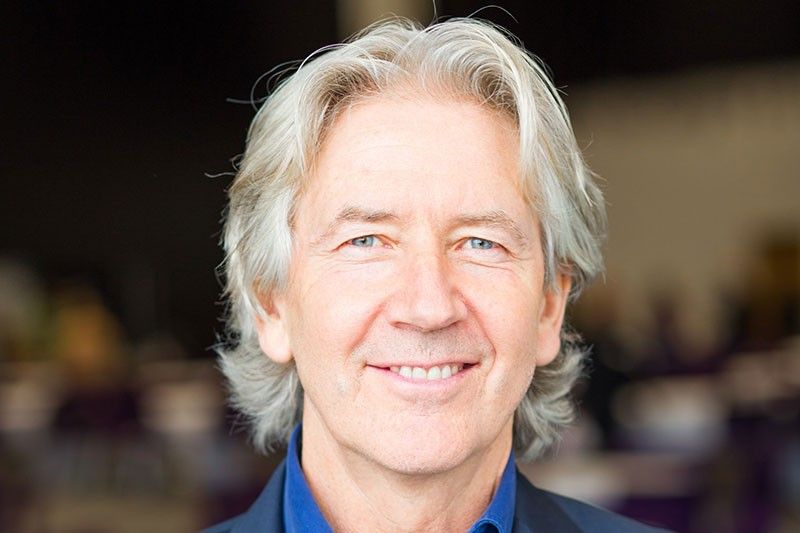
Patrick Holford, the book author.
In fact, a recent analysis by Dr. Apostolos Tsiachristas, Associate Professor in Health Economics at Oxford, found that reducing homocysteine through inexpensive B vitamin supplementation could save the United Kingdom economy £60 million annually and extend life expectancy by an estimated 14 years.
Despite the compelling evidence, mainstream healthcare has been slow to respond. “We’ve spent over two decades urging the health service to prioritize prevention,” Holford said. “This book is my way of giving individuals the information and tools to take charge of their brain health.”
Food for the Brain said offers a home test kit that measures homocysteine, Vitamin D, Omega-3 levels, blood sugar (HbA1c), and antioxidant status — important markers rarely tested by GPs.
Alarmingly, most people fall below the recommended Omega-3 index of 8%, with those under 5% at significantly greater risk of Dementia and brain shrinkage. Only one in five achieve the government’s recommendation to eat oily fish once a week, which is insufficient to prevent Dementia.
Research from The Netherlands supports the connection, showing that people with low levels of Omega-3, B vitamins, and Vitamin D have over four times the risk of developing Dementia. Reducing sugar and processed food intake can lower Alzheimer’s risk by 20%, while increasing antioxidant-rich fruits and vegetables and Vitamin C intake also offers protection. One study involving 2,716 over-60s individuals found that those with the highest antioxidant intake had half the risk of cognitive decline.
Beyond nutrition, the book highlights the importance of lifestyle factors, such as minimizing alcohol, not smoking, regular exercise, social engagement, quality sleep, stress management and sensory health — including hearing and vision. Addressing menopause-related hormonal shifts can also be key for women, with natural HRT showing promise in reducing risk.
“Alzheimer’s: Prevention Is the Cure” is available from foodforthebrain.org/books, which helps support the ongoing prevention research of the Food for the Brain Foundation. It is also available from Amazon, Kindle, Audible, and all good book shops.
Be the first to comment