


MANILA, Philippines — As digital finance rapidly evolves, trust, inclusion and responsible innovation are more crucial than ever.
These themes were front and center at Future4ward 2025: GCash iGnite Innovation Summit, held July 8 at SM Aura, where industry leaders, policymakers and tech partners gathered to shape the country’s digital future.
Here are five key takeaways from the summit.
1. For responsible AI use, humans must be “in the loop”
AI, as in recent years, remained a central focus at this year’s summit—with a more deliberate push for responsible use.
GCash highlighted the importance of keeping the “human in the loop,” a principle that ensures people remain at the center of decision-making, even as automation expands.
Instead of replacing human input, AI is being used to take over repetitive, time-consuming tasks, allowing teams to focus on complex problem-solving, empathy-driven service.
“AI can speed things up, but humans bring the judgment, creativity, and empathy that make the difference,” said Pebbles Sy, Chief Technology and Operations Officer of Mynt, the holding company of GCash.
In GCash, for example, this “human-in-the-loop” approach ensures technology uplifts rather than overrides human decision-making, and at the same time safeguards judgment, ethics and creativity in tech-driven systems.
“That’s how we stay future-ready—by building with AI, but also building for people,” Sy said.
2. Financial inclusion must be built into innovation
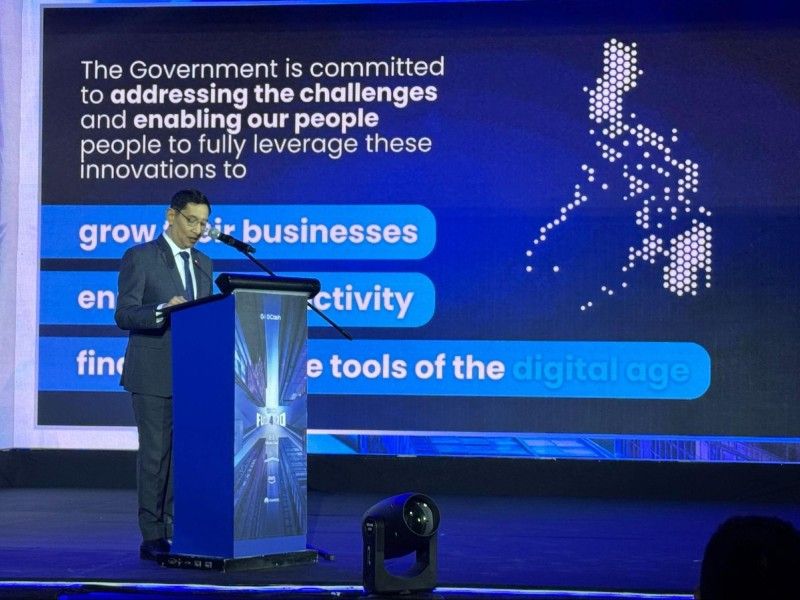
This year’s keynote speaker, Undersecretary Joee Guilas, who spoke on behalf of Special Assistant to the President for Investment and Economic Affairs (OSAP-IEA) Secretary Frederick D. Go emphasized fintech’s growing role in driving economic growth and financial inclusion—key priorities for the Philippine government.
He cited the national ID system as a major step, with Philippine Statistics Authority and GCash working together to boost registration and expand access. So far, 93.4 million Filipinos are registered, and 87.4 million have digital national IDs for identity verification and onboarding.
He described GCash as “an indispensable tool” for Filipinos, evolving into a super app for sending money, paying bills and taxes, accessing loans, shopping and even job hunting.
3. Public and private sectors must co-create the future

Undersecretary Guilas also emphasized the importance of strong partnerships in realizing the government’s digital transformation goals.
In the opening plenary, he affirmed the administration’s commitment to fostering innovation and investment through sound fundamentals, policy reforms and collaborations—such as those with GCash, Globe and the government.
He urged platforms like GCash to keep advancing financial inclusion and accessibility to public service, while helping more MSMEs adopt digital payments and promote a stronger culture of saving, investing and insurance.
In a separate session, Department of Information and Communications Technology (DICT) Secretary Henry Aguda outlined how the government is accelerating its digitalization roadmap through stronger collaboration with telcos and tech players.
Aguda also emphasized the urgency of cybersecurity readiness and talent development, noting that the DICT is rotating staff internationally for training and drawing expertise from the private sector where needed.
4. The balancing act of innovation and regulation is important
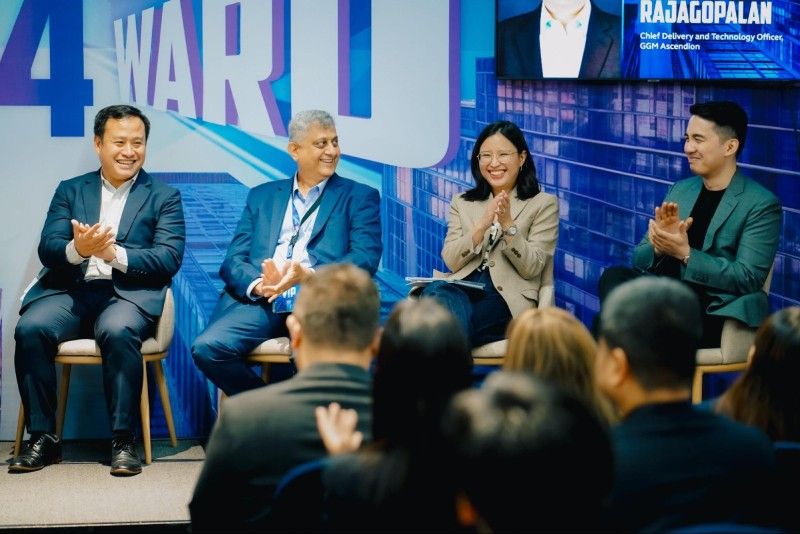
One of the most urgent topics at Future4ward 2025 was the intersection of innovation and regulation. The conversations underscored how the public and private sectors are working together not just to respond to disruption—but to anticipate it.
Atty. Arnold Kabanlit, deputy director Anti-Money Laundering Council of the Philippines, opened the discussion by framing AI as both a boon and a bane.
He warned that AI is being used for identity fraud, real-time scams and money laundering, citing a 2024 study on how Asian crime syndicates are using generative AI and deepfakes.
At the same time, he noted that AI is crucial in strengthening compliance, helping financial institutions improve due diligence, risk profiling and monitoring of suspicious transactions.
This duality is why regulation must evolve in step with innovation. As AI becomes more deeply embedded in digital finance, trust becomes non-negotiable.
In an interview, Bangko Sentral ng Pilipinas General Counsel Roberto Figueroa echoed this need for balance. “We need both: innovation and at the same time, regulation. One needs the other to achieve what we want for society.”
He stressed that safeguards must guide innovation responsibly and inclusively: “It’s not enough that we innovate for the sake of innovation. There have to be limits—guidelines that ensure we’re growing safely and that everyone benefits.”
GCash is already investing in responsible AI, focusing on ethical, secure and trustworthy systems, from fraud prevention to hyper-personalized services.
5. Moving Future4ward with a culture of innovation
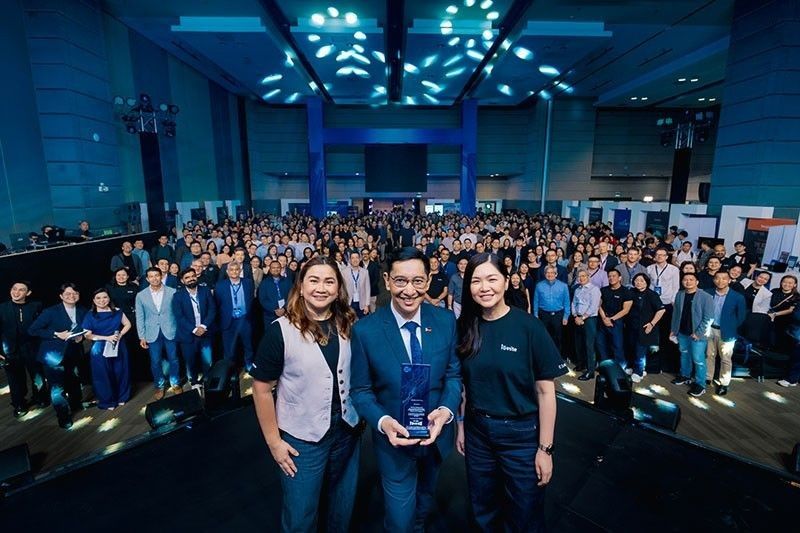
Future4ward is not just about tech, it’s about mindset. At the summit, GCash and its partners, including Alibaba Cloud, Ascendion, and AWS, stressed that building a future-ready fintech ecosystem requires a culture that embraces change.
GCash is investing in scalable, AI-powered platforms to support growth, manage disruptions and ensure seamless user experiences.
More than infrastructure, it’s cultivating a culture of curiosity and agility, empowering teams to challenge norms, move fast and innovate continuously.
“We’re here to break barriers together and raise the bar on innovation and financial inclusion,” Sy said during the opening ceremony.
“Real progress doesn’t happen for ideas alone. It happens when we act, when we question what’s a little bit wrong, experiment boldly and turn inspiration into reality,” she added.
By future-proofing both its systems and its people, GCash is laying the foundation for a digital economy that’s not just advanced, but adaptive—and that’s what it means to move the nation Future4ward.
Editor’s Note: This #BrandSpace story is created with GCash. It is produced by the Advertising Content Team that is independent from our Editorial Newsroom.
Be the first to comment